Hello World, it's me...
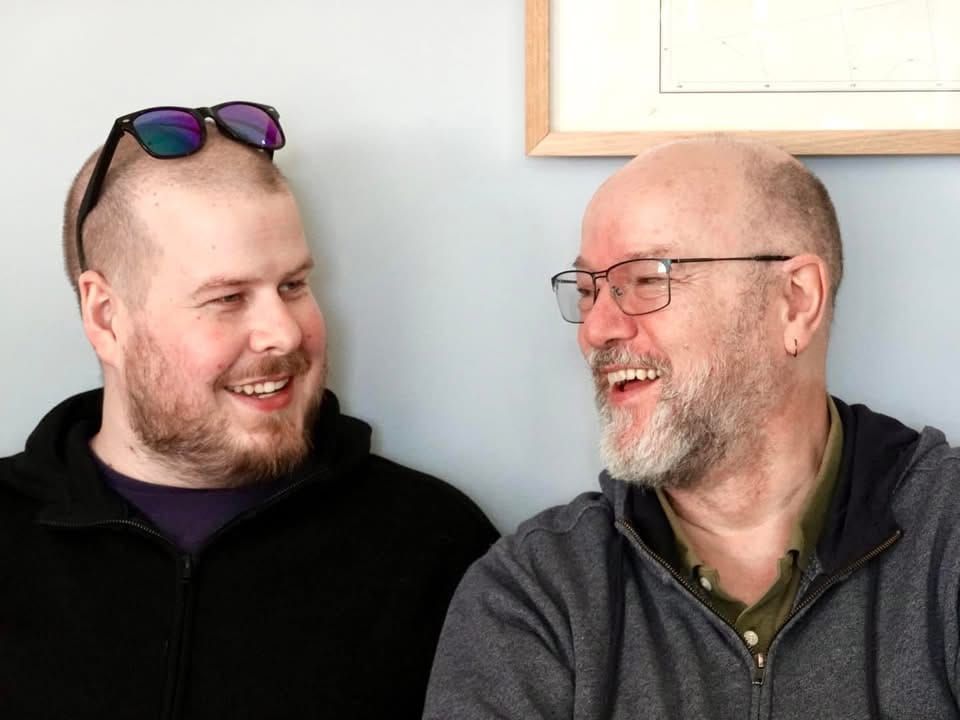
What do you write in your first post on a new site other than "Hello World"? I've written dozens of these openers and you find yourself promising the Earth; grand intentions which translate into delivering a teaspoon of it.
So what's different this time? Excellent question Robert! The difference this time is that my intention is to turn writing into my career. I've always had a flare with the written word and a lot of my work has required writing. Readers often say, without being prompted, that they enjoy the way I write. I guess a touch of British humour helps there and the fact I believed that you shouldn't take yourself too seriously.
It took me a while to get to this place, that is where I feel comfortable in my own skin. One of the biggest obstacles in considering a life as a writer was the narrative that was drummed into me from childhood by my mum, you can't write because you don't read.
It's sort of true that I don't read ... I can't read fiction unless it really grabs me. It has to have some pace, be funny and / or be imaginative. Classic literature usually leaves me cold. I remember the torture of studying titles like; Tess of the D'Urbervilles, Waiting for Godot (and En Attendant Godot in French Lit), Le Grand Meaulnes, A Passage to India, King Lear and on and on and on. It was like pulling teeth.
To be fair, in later life I have found the joy of Shakespeare's and Chaucer's work, but not so much from a literary point of view, but because of their place in the development of the English language. I can quote verbatim, the opening soliloquy to Richard III and the Prologue of the Canterbury Tales. I love language.
Whan that Aprille with his shoures soote,
The droghte of March hath perced to the roote,
And bathed every veyne in swich licóur
Of which vertú engendred is the flour;
Whan Zephirus eek with his swete breeth
Inspired hath in every holt and heeth
The tendre croppes, and the yonge sonne
Hath in the Ram his halfe cours y-ronne,
And smale foweles maken melodye,
That slepen al the nyght with open ye,
So priketh hem Natúre in hir corages,
Thanne longen folk to goon on pilgrimages,
And palmeres for to seken straunge strondes,
To ferne halwes, kowthe in sondry londes;
And specially, from every shires ende
Of Engelond, to Caunterbury they wende,
The hooly blisful martir for to seke,
That hem hath holpen whan that they were seeke.
The reason Chaucer's work is so remarkable is that it was the first piece of serious literature written in the English vernacular. He is the father of English literature. English wasn't seen as a serious contender until this point. If you wanted to say anything serious or meaningful you said it in Norman French, the language of the ruling class, or in Latin, the language of education and the church. Through the Canterbury Tales, you get a little peek into Chaucer's world and the ordinary language of the un-educated working and middle classes of the day.
This is a point of huge flux. Most English people spoke variations on Anglo-Saxon, itself a blend of two languages. There were other influences too, the original British who spoke a language like modern day Welsh, Viking, Norse and others.
Famously there is a Hill in Cumbria which is laughingly called Hill-hill-hill Hill. Torpenhow Hill is a concatenation of the word for 'hill' in three languages.
Tor - Saxon for Hill
Pen - British (Welsh) for Hill
How - Norse for Hill
You can see in Chaucer's verse how French words were liberally salted through the language. Words like licour (liquor), vertu (virtue), pilgrimage, and specially (Especially). Today Anglo-Saxon and Germanic words form only about a quarter of our vocabulary, a quarter comes from Latin and a quarter come from French.
I learnt French at school, but it wasn't until I was able to go to France that it came alive for me. Before I migrated Down Under I was fairly fluent in the language, I can still watch a French film without subtitles.
Lately, during the Covid lockdowns, I learnt Welsh, the language of my ancestors. My granddad came from northeast Wales and the county of Flintshire or as it is written in Welsh Sir Fflint. I discovered that it is a wonderful language which is far more regular and easy to pronounce than English which can be tortuous. For example, how do you say "bow"? You need context to know which bow is being talked about. Is it the bow as in bow and arrow or is it bow as in bend in the middle to show respect to someone. Similarly if someone says bow, to rhyme with how, how do you spell it? Is is bow, bend in the middle, or bough - a branch of a tree?
I am hopeless at spelling in English, but much better in Welsh. Generally if you can hear a Welsh word you can spell it. All those double letters have specific pronunciations. Ff is pronounced as an 'F' whereas a single F is pronounced in Welsh as a 'V'. So the word painted on so many Welsh roads "Araf", meaning "Slow", isn't pronounced 'araf' but 'arav'. Dd is pronounced 'the', Th is pronounced as the 'th' in thin. Ll is a non voiced L. In Welsh 'W' is a half vowel the word Drws (door) isn't lacking a vowel the 'W' is pronounced as the double 'OO' in 'boo' (not the double OO in door though) ... and so on. Welsh spelling is reliable unlike English where you have to know from usage how to pronounce words based on context rather than spelling.
That's a neat segue (from Italian and pronounced segway), to talk about why I've called this channel "Swnio". It's the Welsh word for "Sounds". It's pronounced "Soonio" with the "oo" sounding like the oo in soot. It's very likely the case that I've got the Welsh meaning and usage of this word wrong, but I like the sound of it and that's kind of the point. I'm going to write about things l like the sound of or that I'm interested in. Hopefully you'll find at least some of that interesting. I've been told I write well, so let's put it to the test.